Introduction
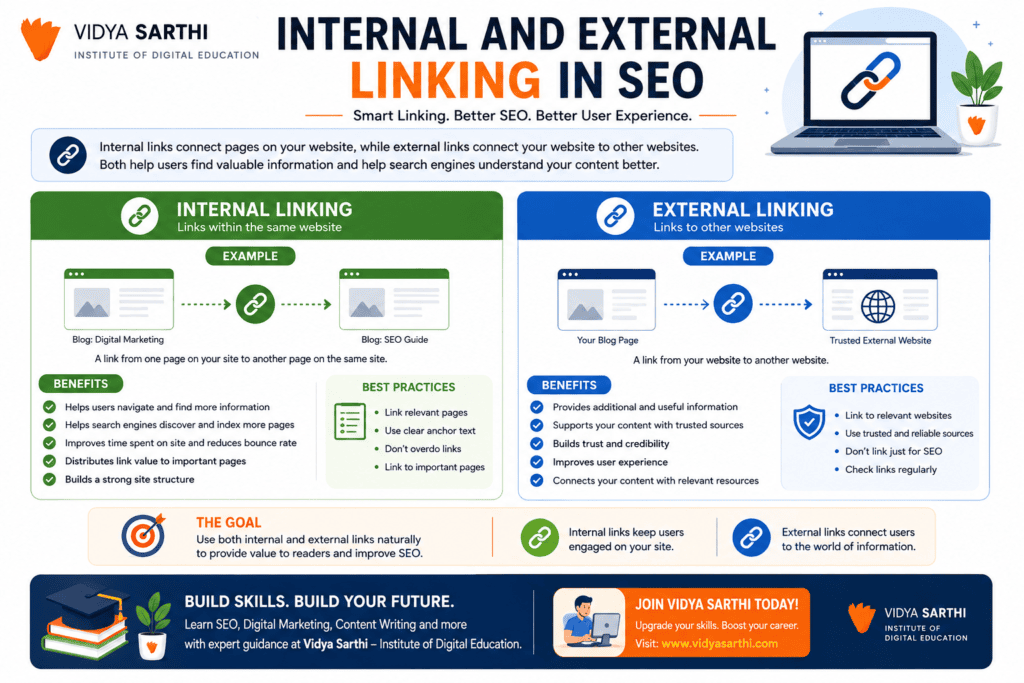
Internal and external linking are important parts of SEO. When we create a blog or webpage, adding useful links can help users find more information and can also help search engines understand our website better.
A link is simply a connection from one webpage to another webpage.
For example, if we write a blog about digital marketing, we can add a link to another blog on our website about SEO. This is called an internal link because both pages are on the same website.
We can also add a link to a trusted website such as an official Google page or another useful resource. This is called an external link because the link takes users to another website.
Both types of links have different purposes, but both can make our content more useful.
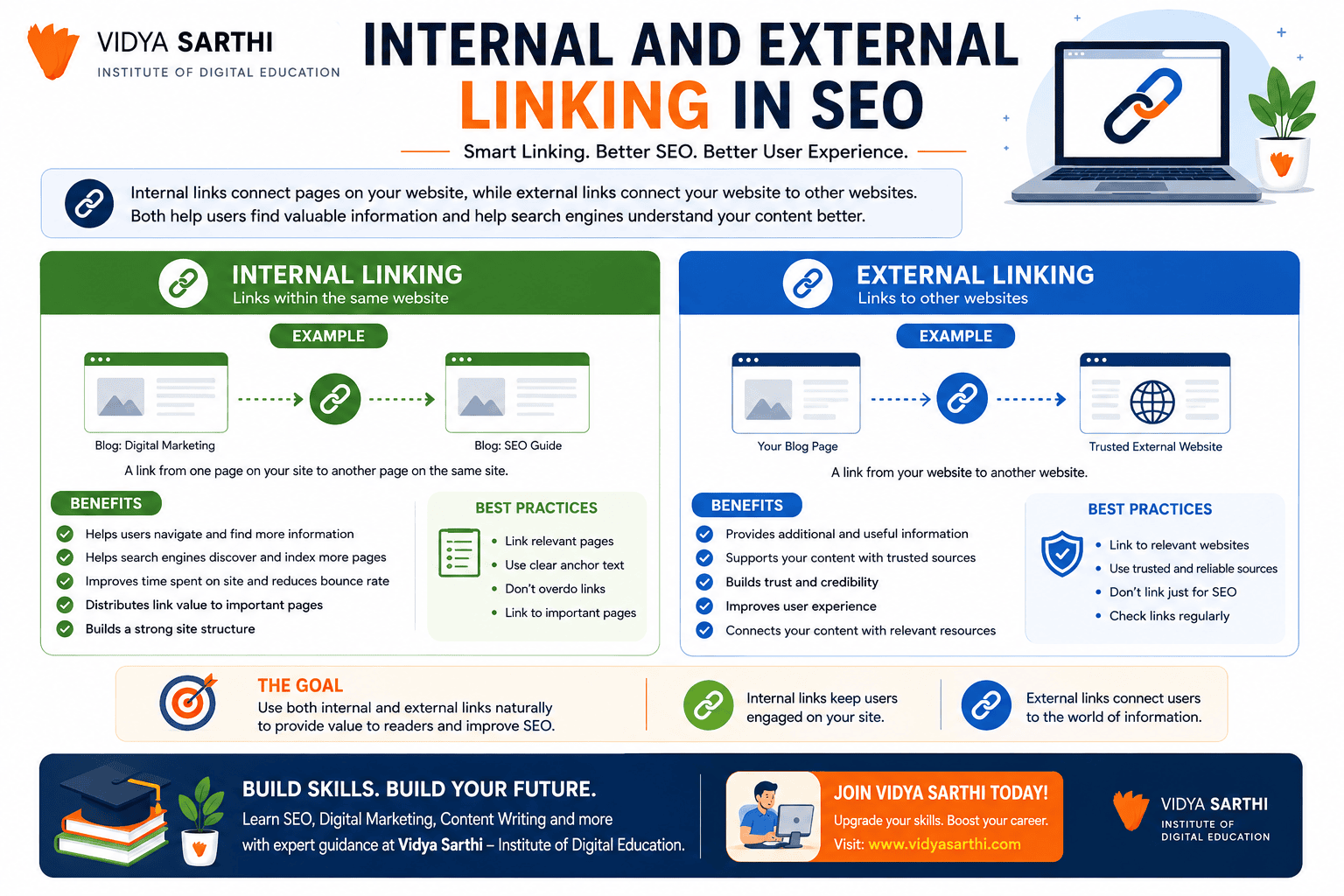
In simple words, internal links connect pages within our website, while external links connect our website to other websites.
Understanding how to use both types of links properly can help us create better content, improve website navigation, and provide more value to our audience.
Summary
Internal and external links are two important types of links used in SEO.
Internal linking means adding a link from one page of our website to another page on the same website.
For example, if we have a blog about digital marketing and link it to another blog about SEO, that is an internal link.
External linking means adding a link from our website to another website.
For example, if we are explaining SEO and link to an official Google resource for additional information, that is an external link.
Internal links can help users navigate our website and help search engines discover and understand different pages.
External links can help us provide additional information and connect our content with trusted and relevant resources.
The main goal of both types of linking should be to provide a better experience for the reader.
Main Content
What Is Internal Linking in SEO?
Internal linking is the process of adding links from one page of our website to another page on the same website.
Let’s understand this with a simple example.
Suppose Vidya Sharthi has a blog called “What Is Digital Marketing?”
Inside this blog, we talk about SEO and want to provide more information about it. We can add a link to another blog on our website called “What Is Keyword Research in SEO?”
When a reader clicks on the link, they move from one page of our website to another page.
This is an internal link.
For example:
Digital Marketing → SEO → Keyword Research
All these pages can be connected through internal links.
Why Is Internal Linking Important? 
Internal linking is important for several reasons.
1. It Helps Users Find More Information
Internal links make it easier for readers to find related information.
For example, someone reading about digital marketing may also want to learn about SEO, social media marketing, or content marketing.
Instead of making the reader search for these topics separately, we can provide links within the blog.
This makes the website easier to use.
2. It Helps Search Engines Understand Our Website
Search engines use links to discover and understand pages on a website.
When we connect related pages through internal links, it can help search engines understand the relationship between those pages.
For example, if several pages on our website are related to SEO, linking them together can create a clear structure.
3. It Helps Users Spend More Time on Our Website
When readers find useful links, they may visit other pages on our website.
For example, a student may read a blog about SEO and then click on a link about digital marketing courses.
This allows the user to explore more of our website.
4. It Helps Distribute Link Value
Internal links can help search engines discover important pages and understand which pages are connected.
For this reason, we should make sure that important pages are not isolated from the rest of our website.
What Is External Linking in SEO?
External linking means adding a link from our website to another website.
For example, suppose we are writing a blog about SEO and want to provide additional information about how search engines work.
We can link to a trusted and relevant external resource.
When a user clicks the link, they leave our website and visit another website.
This is called an external link.
External links are useful when another website provides information that can support or explain our topic better.
Why Is External Linking Important?
1. It Provides Additional Information
Sometimes we cannot explain everything in one blog.
External links allow us to provide readers with additional resources.
For example, if we are explaining digital marketing statistics, we can link to a reliable research report or official source.
This helps readers find more detailed information.
2. It Can Improve Content Quality
Useful external links can make our content more informative.
When we connect our content with relevant and trustworthy resources, readers can explore the topic further.
However, we should always choose links carefully.
3. It Builds Trust
When we support information with reliable sources, it can make our content more trustworthy.
For example, an education blog can link to official educational resources when discussing a particular topic.
The important thing is that the external website should be relevant and trustworthy.
4. It Helps Readers
The main purpose of external linking should be to help the reader.
We should not add external links just because we want to add more links to our blog.
Every link should have a clear purpose.
Internal Linking vs External Linking
The main difference between internal and external links is where the link takes the user.
| Internal Linking | External Linking |
|---|---|
| Connects pages on the same website | Connects to another website |
| Helps users navigate our website | Provides additional resources |
| Helps search engines discover related pages | Connects content with useful external resources |
| Keeps users within our website | May take users to another website |
| Useful for website structure | Useful for references and additional information |
Both types of links can be useful when they are used naturally.
How to Use Internal Links Properly
We should follow a few simple practices when adding internal links.
Link Relevant Pages
The pages should be related to each other.
For example, a blog about SEO can link to a blog about keyword research.
A blog about digital marketing can link to blogs about SEO, social media marketing, and content marketing.
Use Clear Anchor Text
Anchor text is the clickable text in a link.
Instead of writing:
Click here
we can write:
Learn more about keyword research
This tells the reader what they will find after clicking the link.
Don’t Add Too Many Links
We should not add links everywhere in the blog.
Too many links can make the content difficult to read.
We should add links where they are genuinely useful.
Link to Important Pages
Important pages of our website should be easy to find.
For an education institute, important pages may include course pages, about pages, contact pages, and useful educational blogs.
How to Use External Links Properly
External links should also be used carefully.
Choose Relevant Websites
The external website should be related to our topic.
If we are writing about SEO, linking to a trusted SEO resource makes more sense than linking to an unrelated website.
Choose Reliable Sources
We should try to link to trustworthy and useful sources.
For example, official websites, recognized organizations, research sources, and reliable educational resources can be useful depending on the topic.
Don’t Add Links Just for SEO
External linking should not be done only to manipulate search rankings.
The main purpose should be to provide useful information to our readers.
Check Links Regularly
Websites can change or pages can be removed.
Broken links can create a poor user experience. Therefore, it is useful to check important external and internal links from time to time.
Example of Internal and External Linking
Let’s take a simple example of an education website.
Suppose we have a blog called:
“What Is Digital Marketing?”
Inside this blog, we can add an internal link to:
“What Is SEO?”
This keeps the reader on our website and provides more information.
We can also add an external link to a trusted resource that explains a specific SEO concept in more detail.
So, the blog may look like this:
Digital Marketing Blog → SEO Blog → External Resource
This creates a useful path for the reader.
Common Linking Mistakes to Avoid
There are some common mistakes that we should avoid.
First, we should not add irrelevant links. A link should be related to the topic and useful to the reader.
Second, we should avoid using the same anchor text unnecessarily for every link.
Third, we should not add too many links just to make the blog look optimized.
Fourth, we should check for broken links because broken links can make it difficult for users to find information.
Finally, we should always think about the reader first.
SEO is important, but creating a good user experience is also important.
Conclusion
Internal and external linking are simple but important parts of SEO.
Internal links connect different pages on our own website. They help users find related content and help search engines understand the structure of our website.
External links connect our website to other websites. They can help us provide additional information, support useful resources, and make our content more valuable to readers.
The key is to use links naturally and only when they provide value.
We should link relevant pages, use clear anchor text, choose trustworthy external resources, and avoid adding unnecessary links.
In simple words, internal links help users explore our website, while external links help users find useful information from other trusted websites.
When we use both types of links properly, we can create better content, improve website navigation, and give our audience a better experience.
Call to Action for Vidya Sharthi
Want to learn more about SEO, digital marketing, content writing, and other digital skills?
Vidya Sharthi – Institute of Digital Education can help you build practical digital skills and take the next step toward your career goals.
Whether you are a student, beginner, or working professional, learning digital skills can help you understand how businesses work and grow in today’s online world.
Start learning today with Vidya Sharthi and build the skills you need for your digital career.
Learn. Practice. Grow with Vidya Sharthi.